AI, working parents, growth markets: New Minister of State Foo Cexiang on his priorities
Mr Foo’s priorities include how firms can adopt AI without compromising workers’ development, and helping Singapore expand into promising overseas markets.
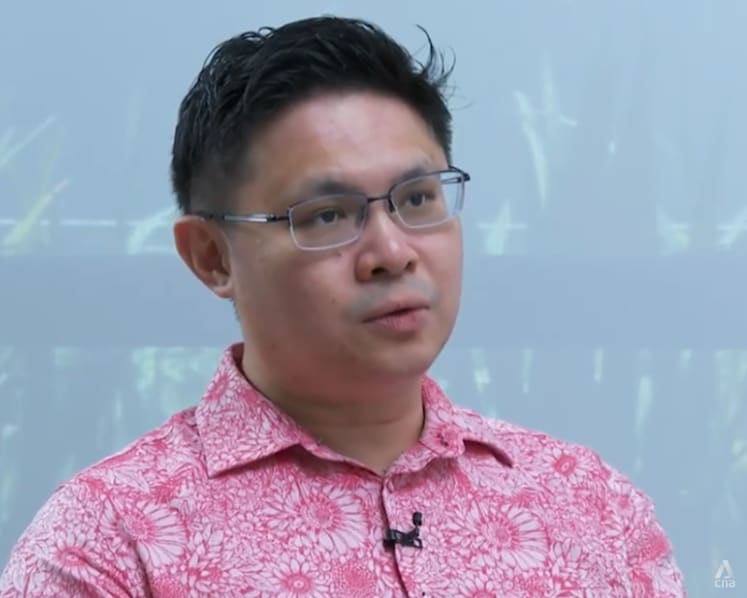
Mr Foo Cexiang, Minister of State in the Ministry of Manpower (MOM) and the Ministry of Trade and Industry (MTI), speaks to CNA during an interview. (Image: CNA)

This audio is generated by an AI tool.


SINGAPORE: Bringing businesses, workers and the government closer together to deliver tangible outcomes for Singaporeans will be a key focus for new Minister of State Foo Cexiang, as he takes on his manpower and trade and industry portfolios.
For the MP for Tanjong Pagar GRC, that means tackling questions such as how companies can harness artificial intelligence without compromising workers' development, how workplaces can better support parents and how Singapore can tap new growth markets overseas.
Mr Foo, who took office at the two ministries on Tuesday (Sep 1), said he sees his role as one of connecting different groups and perspectives, then finding common ground that can be translated into practical results.
Speaking to CNA on Aug 14, ahead of assuming his new role, Mr Foo said this approach has remained consistent throughout his years in the public service and his time serving residents in his constituency.





It is also one he intends to bring to his new portfolios.
MAKING AI WORK FOR WORKERS
Among the issues high on his agenda at the Manpower Ministry is how companies integrate AI while ensuring that workers still have opportunities to learn, develop and progress in their careers.
Mr Foo said he intends to work closely with the human resources (HR) sector on the issue.
“Together with HR, we’ll be able to influence, in some sense, how AI is integrated within not just a company, but a worker's career development pathway,� he said.
This means looking closely at which tasks can be handed over to AI and where space should be preserved for employees to gain experience and grow their capabilities, he added.
“We should integrate AI because the potential is significant,� he noted.
“But it's in the how and in the where that the in-depth conversations need to be had between companies, business leaders, HR leaders, unions and workers. That is the important conversation that will be critical in this next phase.�
BALANCING WORKING PARENTS & BUSINESSES
Mr Foo is also looking at how workplaces can better support parents while recognising employers’ operational needs.
As a father of three, he said he understands the challenge of balancing career and family responsibilities, and how this could weigh on young couples as they consider whether to have children.
He believes there is room to explore different forms of workplace flexibility and find arrangements that work for both employees and businesses.
“Many parents who are running companies or in managerial positions understand this tension intimately themselves because they have to manage this on an everyday basis,� he said.
“So, this is something we really have to work on, get more feedback and views, (explore) different scenarios, different forms of flexibilities, so that we are able to build into the overall system.�
LOOKING TO NEW GROWTH MARKETS
At the Trade and Industry Ministry, Mr Foo is looking further afield as global trading patterns shift and countries diversify their economic links.
He sees opportunities for Singapore to remain at the centre of global trade flows while preparing businesses and Singaporeans to venture into markets that could become increasingly important in the decades ahead.
These include established markets such as Europe as well as emerging ones in Africa, Latin America and Central Asia.
“A lot of these countries have very strong population dividends, very young and growing populations. I think those are where potentially opportunities will be in the next 20 to 30 years,� he said.
Beyond individual policy areas, Mr Foo said his contribution could lie in bringing together different perspectives and translating them into practical outcomes.
He believes the government can go beyond consulting businesses and workers and move towards deeper collaboration with them.
“It's really seeing how we can, as the government, partner the private sector, business leaders, HR leaders, and have an outcome that is clear to everybody that will provide more good jobs for fellow Singaporeans,� he said.
“I think that kind of tangible benefit is what many people want to see.�
Asked how he hopes Singaporeans will come to view him in his new role, Mr Foo said he hopes his ability to bring people and ideas together will be reflected in his work.
He said: “I hope that Singaporeans will not just perceive, but see me in action as a minister of state who engages deeply, who is able to connect people, connect ideas and make good outcomes for Singapore.�