He gave up his childhood to care for his brother. Now he has to learn to live without him
"He was my best friend, my best buddy, my best brother, the best son I could ever ask for," says Mr Suresh Vanaz Purushothaman.
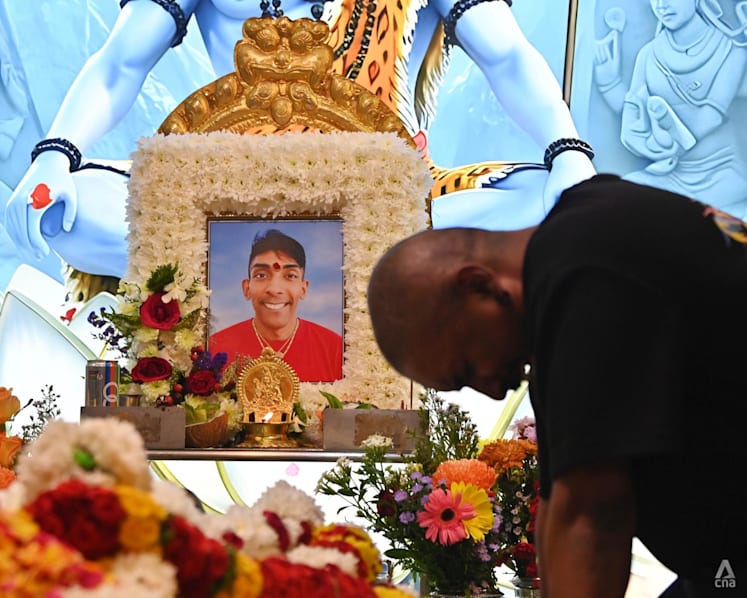
Mr Suresh Vanaz Purushothaman mourns the loss of his brother, Mr Gunaseelan Purushothaman, on Aug 31, 2026. (Photo: CNA/Alyssa Tan)

This audio is generated by an AI tool.


SINGAPORE: When Mr Suresh Vanaz Purushothaman was a child, trips to the playground looked different. While other children his age were on the swings and slides, he sat by the side with his younger brother, watching them play.
His brother Gunaseelan was diagnosed with cerebral palsy at age three, when Mr Suresh was about seven. From then on, he helped his mother care for his brother, often at the expense of his own childhood.
"If you asked me when my stress levels started, it started when I was pretty much about seven, eight," said Mr Suresh, now 47.
He recalled working at a coffee shop as a child, cleaning tables to earn money to help out with the family's needs.





"Of course, I was tired. I couldn't concentrate on my studies that well because the rules were: 'Take care of your brother, go to school, bring him to school, change his diapers, give him food.'"
But even then, Mr Suresh felt caring for "Seelan" was his duty. The bond between them, he said, "sparked immediately" when his brother was born, and watching his parents care for him made him want to do an even better job himself.
Their parents were divorced and the children lived with their mother. After she died in 2009, Mr Suresh became his brother's main caregiver, with his responsibilities increasing by "a million per cent".
"Isn't it my duty as a sibling to take care of my brother? Isn't it my duty to take care of the brother that I had all these years?" he said. "Yes, he's physically challenged. But what a beautiful challenge."
So when Mr Gunaseelan, 42, died in his arms on Aug 29 after developing a fever and experiencing seizures, Mr Suresh did not feel freed of the responsibilities he had carried for most of his life. Instead, he mourned that he could no longer fulfil them.
"I don't know how I'm going to handle this in my future ... The loneliness of thinking of him, the moments that I spend, every routine ... changing his diaper, carrying him to the toilet, showering him, shaving him, brushing his teeth.
"I didn't feel tired of it and I will never feel tired of it. In fact, I'm upset that I'm not able to do this duty anymore," said Mr Suresh, the oldest of three children.
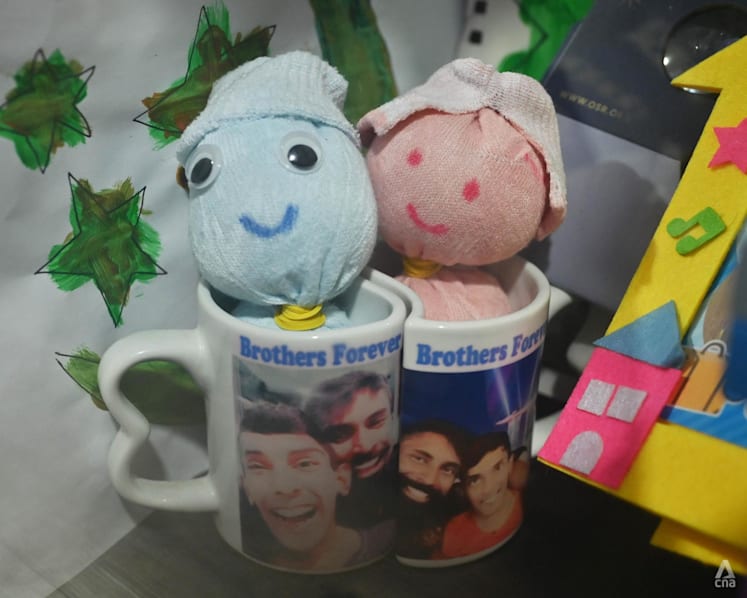
For years, the brothers had a social media presence, with Mr Suresh sharing stories about caregiving and their lives together. He saw himself as an advocate for people with disabilities and their caregivers.
In December 2024, the pair found themselves at the centre of public attention after a video of an altercation at a VivoCity lift lobby circulated online. The incident began when Mr Suresh, manoeuvring his brother's wheelchair out of a crowded lift, accidentally bumped into a man, leading to a heated exchange.
He used the incident to highlight the everyday pressures caregivers face in public spaces, and the need for greater consideration for people with disabilities.
But Mr Suresh said it was never about the attention. It was about making sure his brother was cared for, as he had been doing for years in his effort to give him the best life possible.
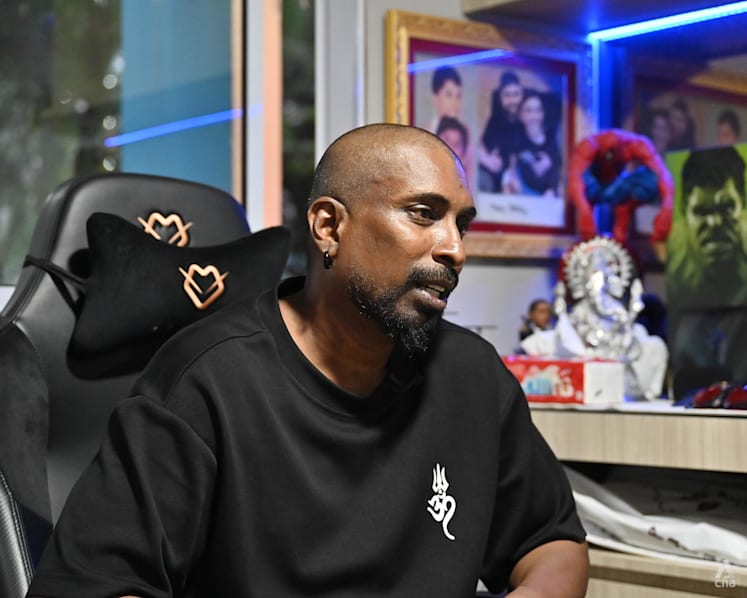
Speaking to CNA on Monday (Aug 31) in his brother's room, Mr Suresh packed the clothes that would be cremated with him.
"We would always dress in identical clothes. If I had something, he had it too. Now I'd have to wear these clothes alone."
The room was filled with Mr Gunaseelan's favourite things: pairs of sunglasses, and Spider-Man and Transformers figurines. But most prominent were photographs of the two of them, hung on the walls, placed in a showcase and framed on the table.
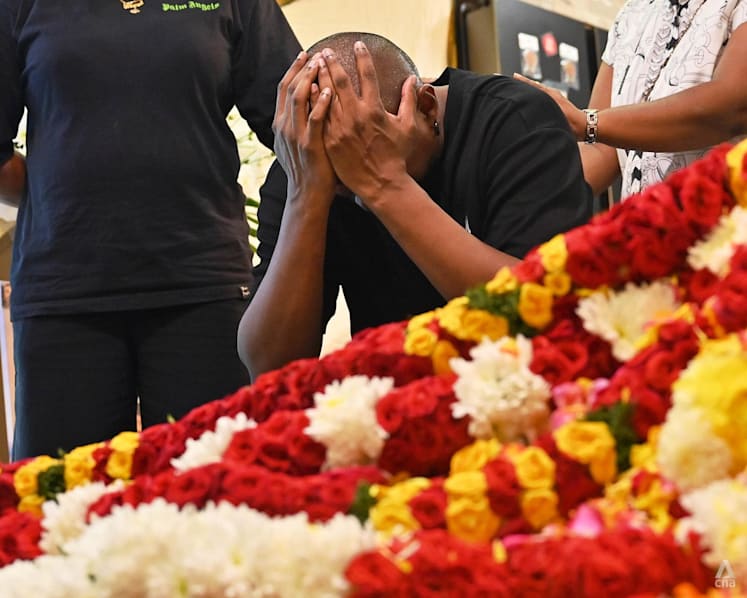
As mourners streamed in and out of the family's Serangoon flat on Monday, Mr Suresh wailed and repeatedly asked his brother to wake up and "say hi" to those who had come to see him.
"My brother needed me and needed my love," he said. "He was my best friend, my best buddy, my best brother, the best son I could ever ask for."
"MY ROLE MODEL"
Even Mr Suresh's career as an emcee and dance choreographer traced back to Mr Gunaseelan, who affectionately called him "anneh" – brother in Tamil.
As children, Mr Suresh was his brother's main entertainer, finding ways to make him laugh, including pretending to be a show host. "The laughter was something different and I loved the way he laughed. This is what made me an entertainer."
When Mr Suresh later became a choreographer, his brother remained the person he wanted to perform for.
"It was just me saying I'm going to entertain because my brother will be watching me. I will make sure to perform for him. He has motivated me since young to be an entertainer. He has been my role model for who I am today, to be a better caregiver."
Money from these gigs went towards his brother's daily needs and holidays, one of their favourite things to do together. The pair travelled to Thailand, India and Indonesia, and Mr Suresh carried his brother up the almost 300 steps of Batu Caves in Malaysia every year without fail. They also had plans to visit Australia in December.
"Although I brought him to many countries, many places that he enjoyed, he motivated me to do that for him. Seeing his smile, the energy he had whenever he saw new people ... It just inspired me to give him the best."
But now, Mr Suresh said he no longer has the desire to entertain or perform, and might stop doing it completely.
Mr Suresh also spoke about the financial and mental strain of caregiving. Although Mr Gunaseelan attended the AWWA day activity centre, much of his care still fell on Mr Suresh.
But he never blamed his brother. "I may look tough, but trust me, I'm a soft guy towards him. Even if I'm angry, it is just one minute, and that's it. And I'll just go back to him and he will give me his cheeky smile."
As he grapples with how to move forward without the brother who had been at the centre of his life for decades, Mr Suresh hopes to keep his memory alive by continuing to advocate for people with disabilities and their caregivers.
"I'm going to talk about his legacy, how he has lived his life and how we can encourage caregivers to put your heart and soul to care for (others)," he said.
"As a caregiver, it's never been easy. But I've pulled through, and the reason why I pulled through is because my brother taught me the value of life."