





Presented by
HOW AUSTRALIA AND SINGAPORE
ARE DISRUPTING REGIONAL
ILLICIT TOBACCO NETWORKS
Border agencies are sharing intelligence and targeting suspect shipments to strengthen supply chain security across the region.
What do gym equipment, diffuser fragrance and fruit juice have in common?
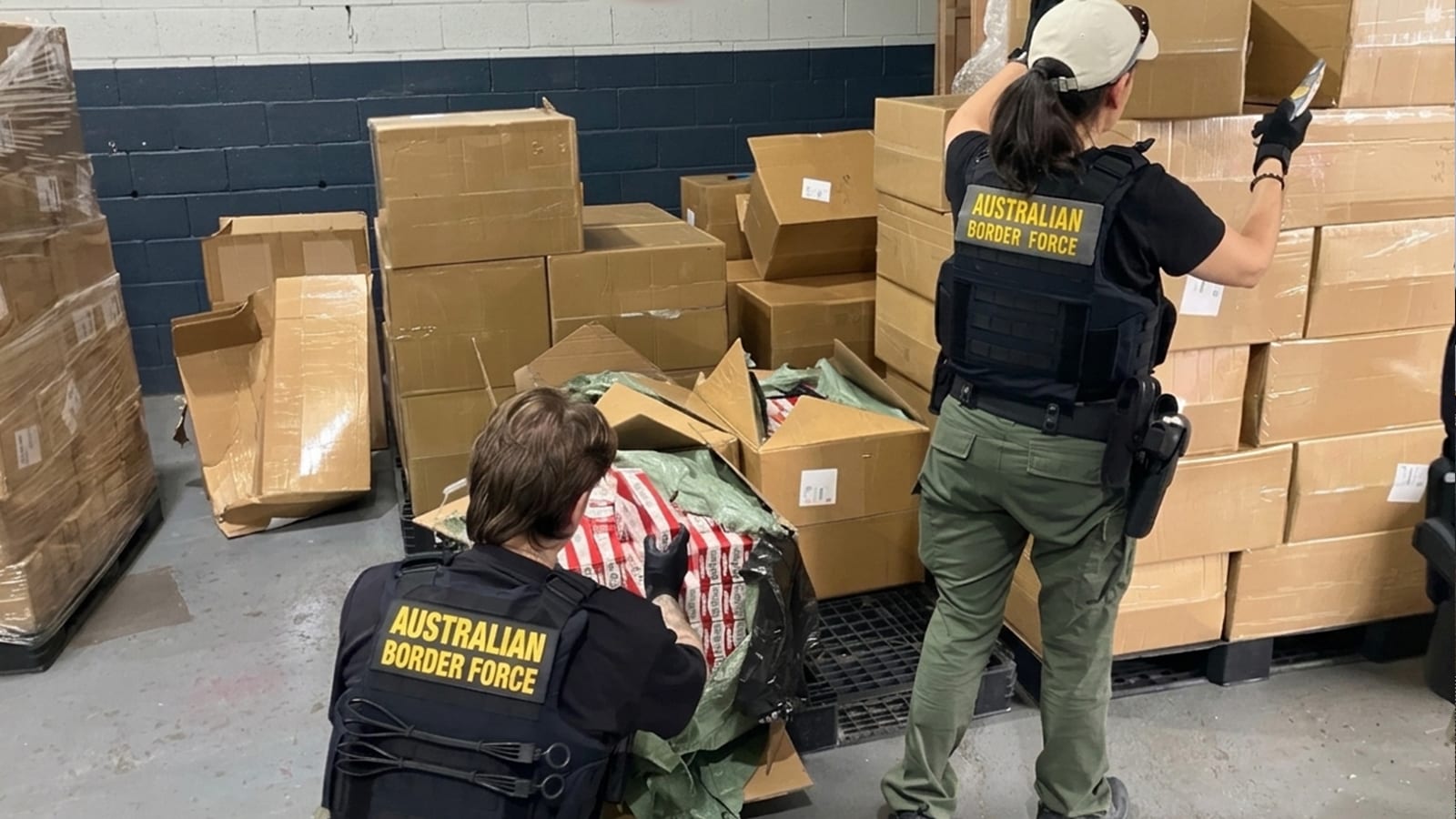
These are examples of everyday items regularly declared on customs documents for consignments imported into Australia. However, when Australian Border Force (ABF) officers intercept them, they routinely find illicit tobacco products, from cigarettes to vape liquid.
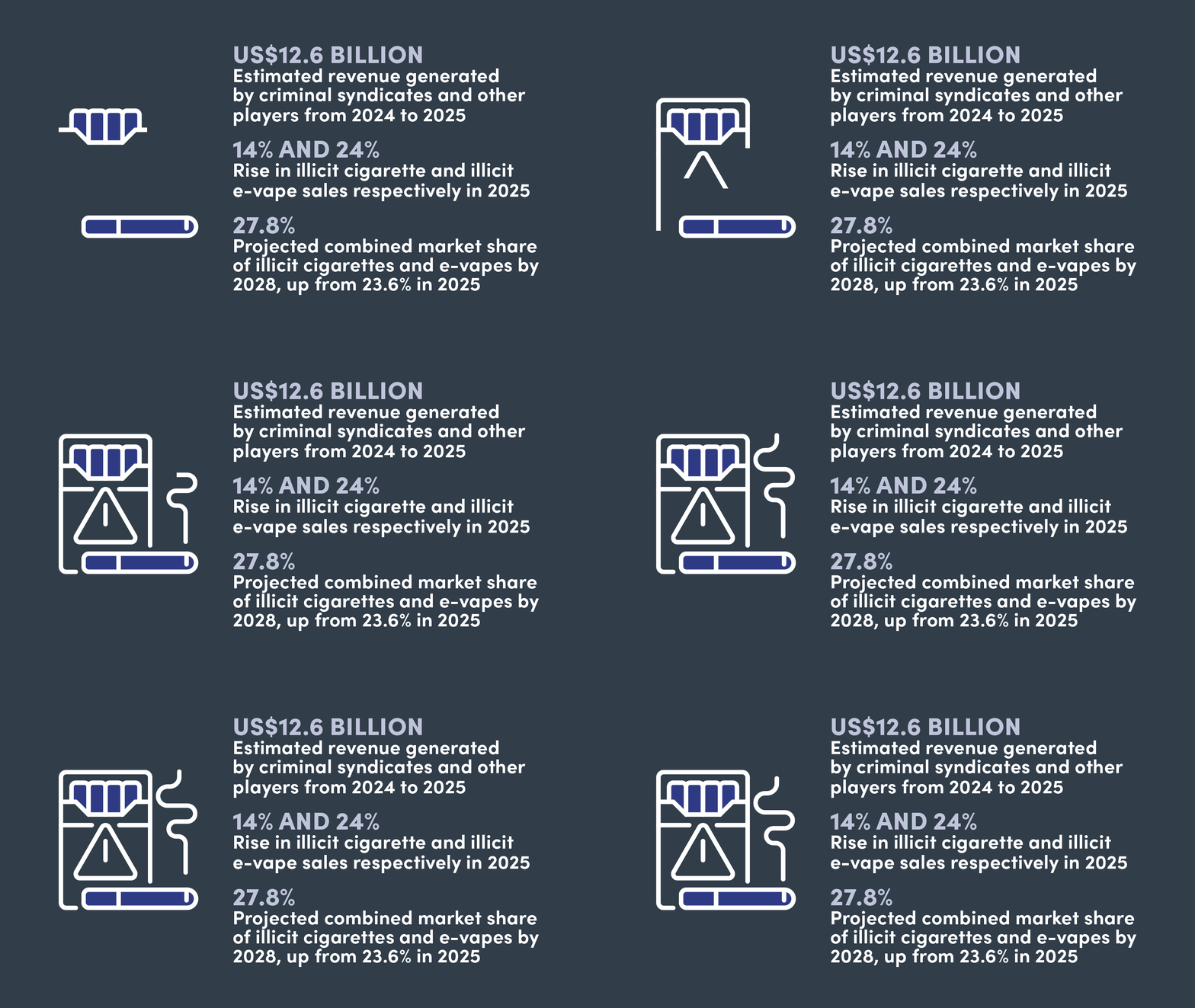
Australia faces a challenge from the illegal trade in tobacco products. For the 2024-25 financial year, authorities estimated that excise evaded on undetected illicit tobacco ranged from A$7.7 billion (S$7 billion) to A$11.8 billion. From 2017 to 2025, illicit tobacco’s share of overall tobacco consumption in the country also rose sharply from 12 per cent to 60 per cent.
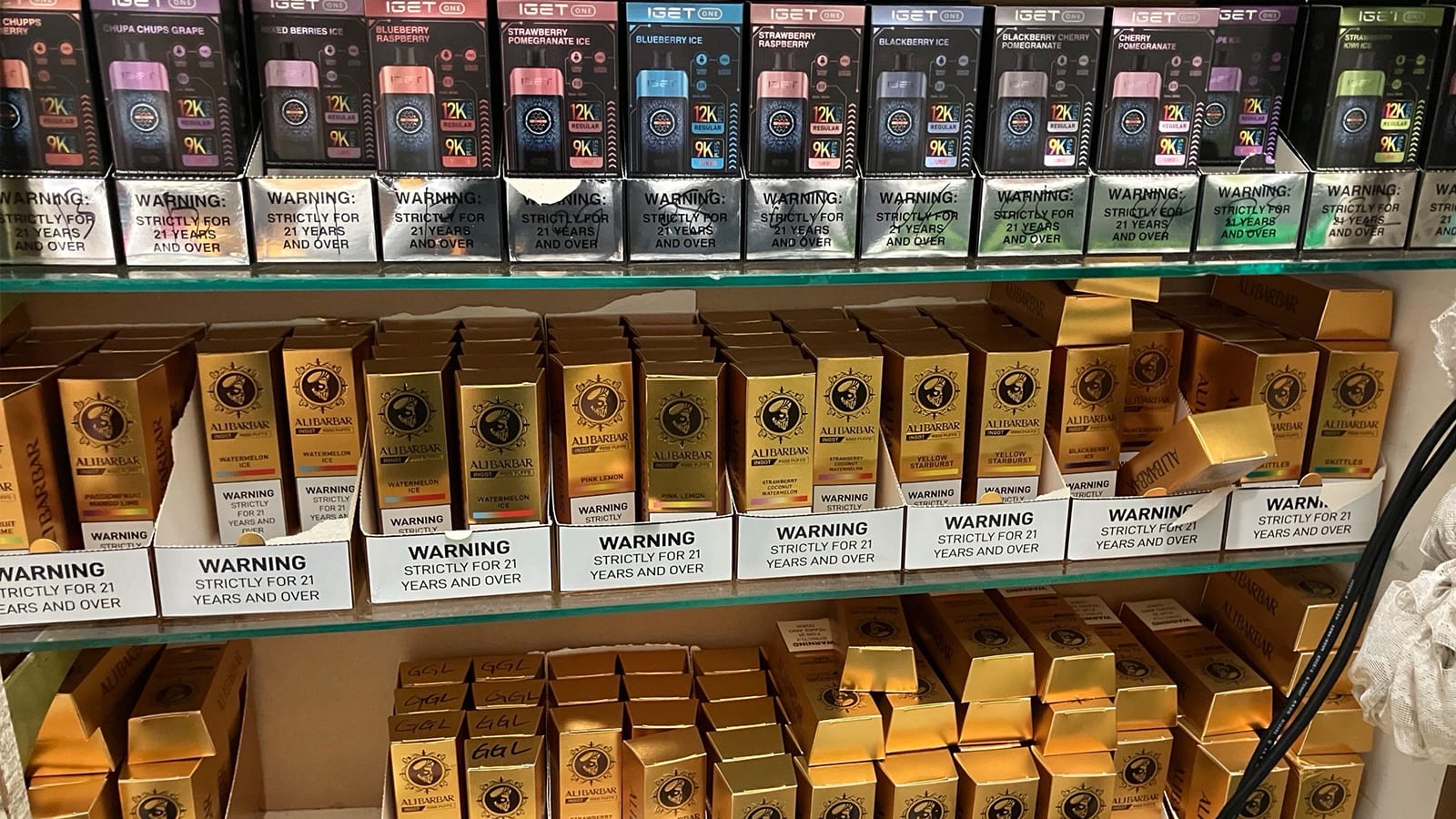
Many of these imports are listed as arriving from ports in Asia, although those locations may not be where the shipments originated. As a major trade hub and Australia’s sixth-largest trading partner, Singapore handles a significant proportion of Australia-bound sea and air cargo.
That connectivity is vital to legitimate trade, but it can also create opportunities for transnational serious and organised crime networks, making cooperation between customs agencies especially important.
To counter these risks, ABF and Singapore Customs are strengthening their partnerships and working with other Southeast Asian counterparts. Beyond intelligence-sharing and operational cooperation, their shared goal is to protect supply chain integrity – keeping legitimate goods moving across borders while preventing criminals from exploiting the same trade routes.
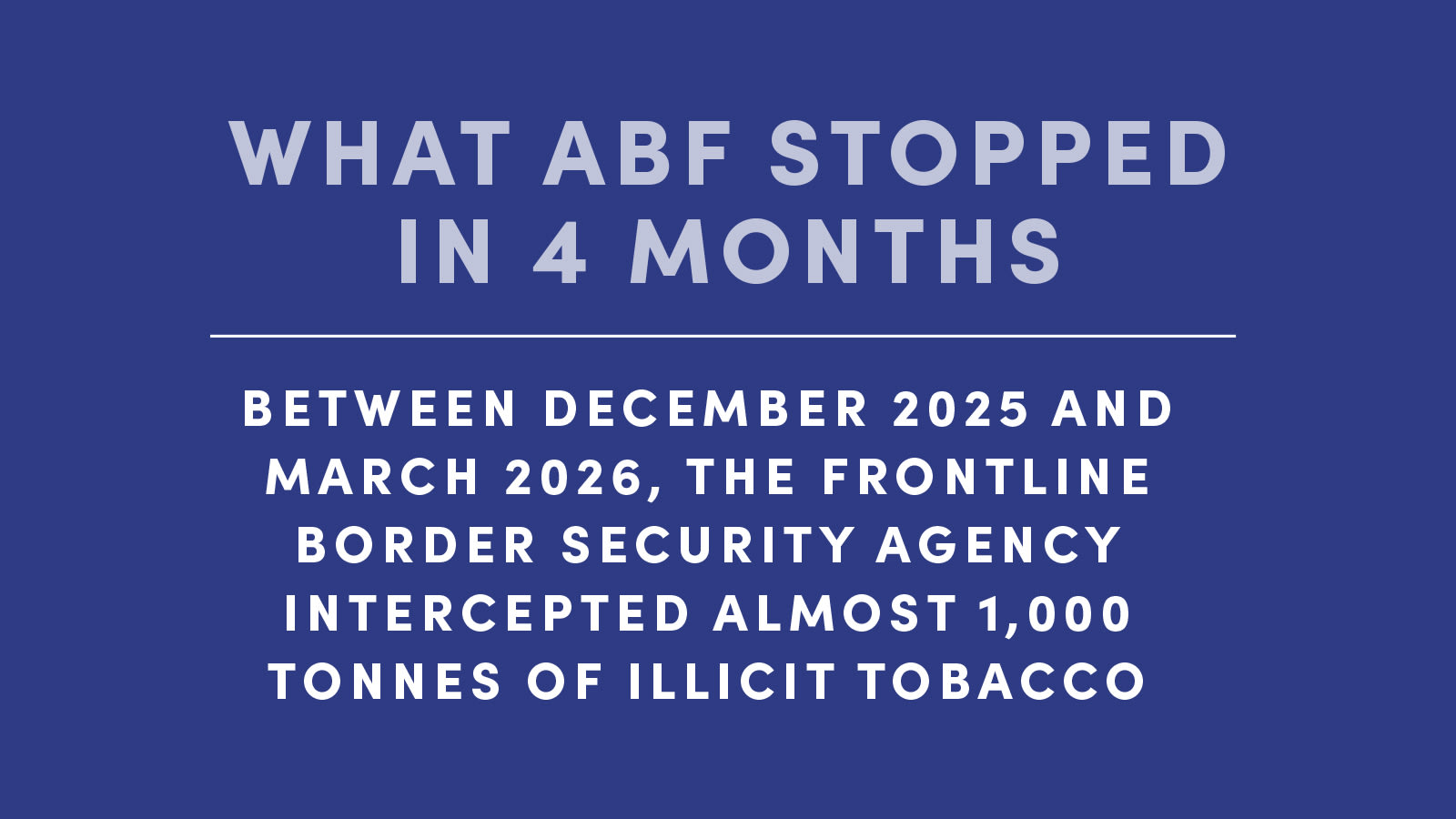
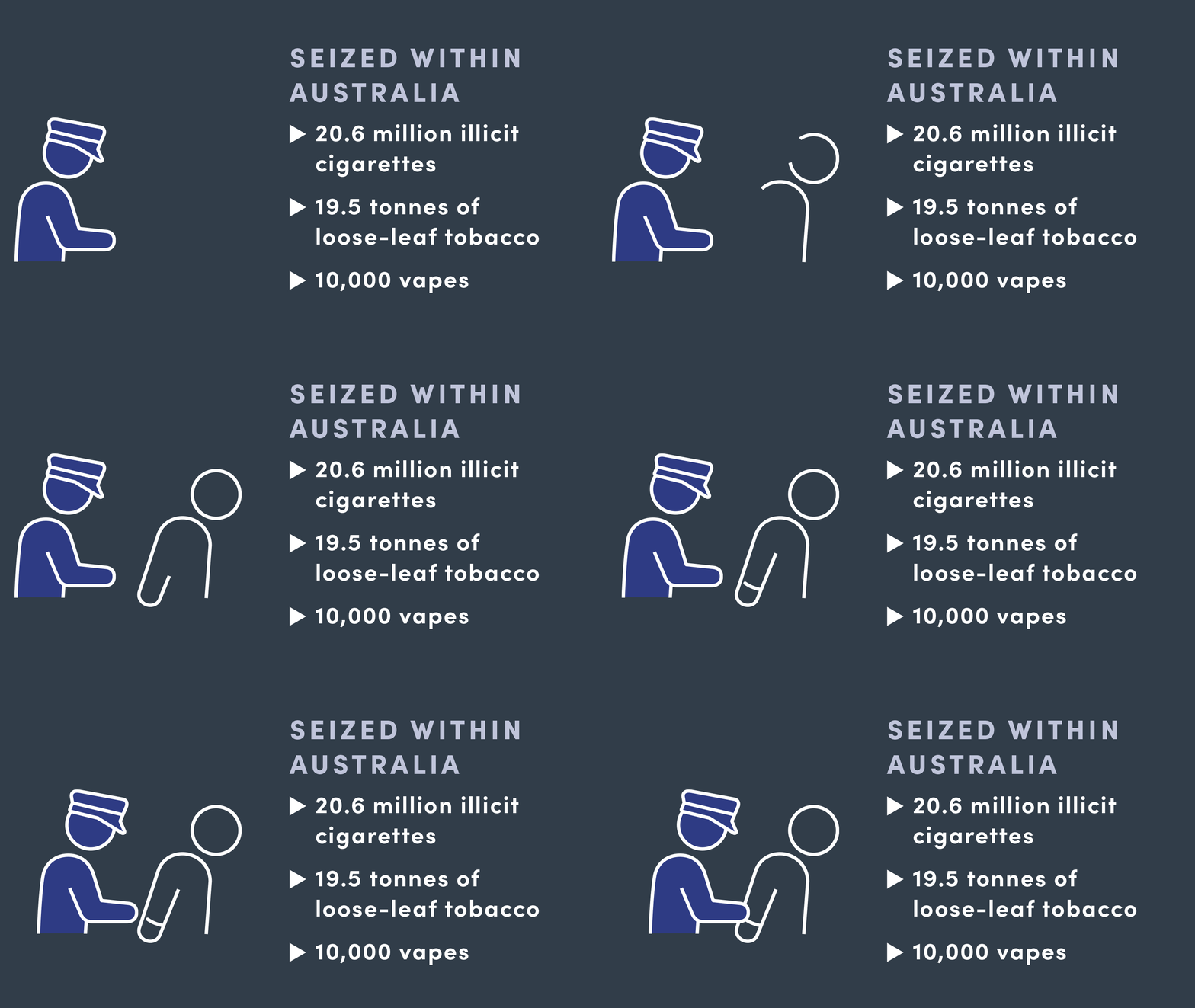
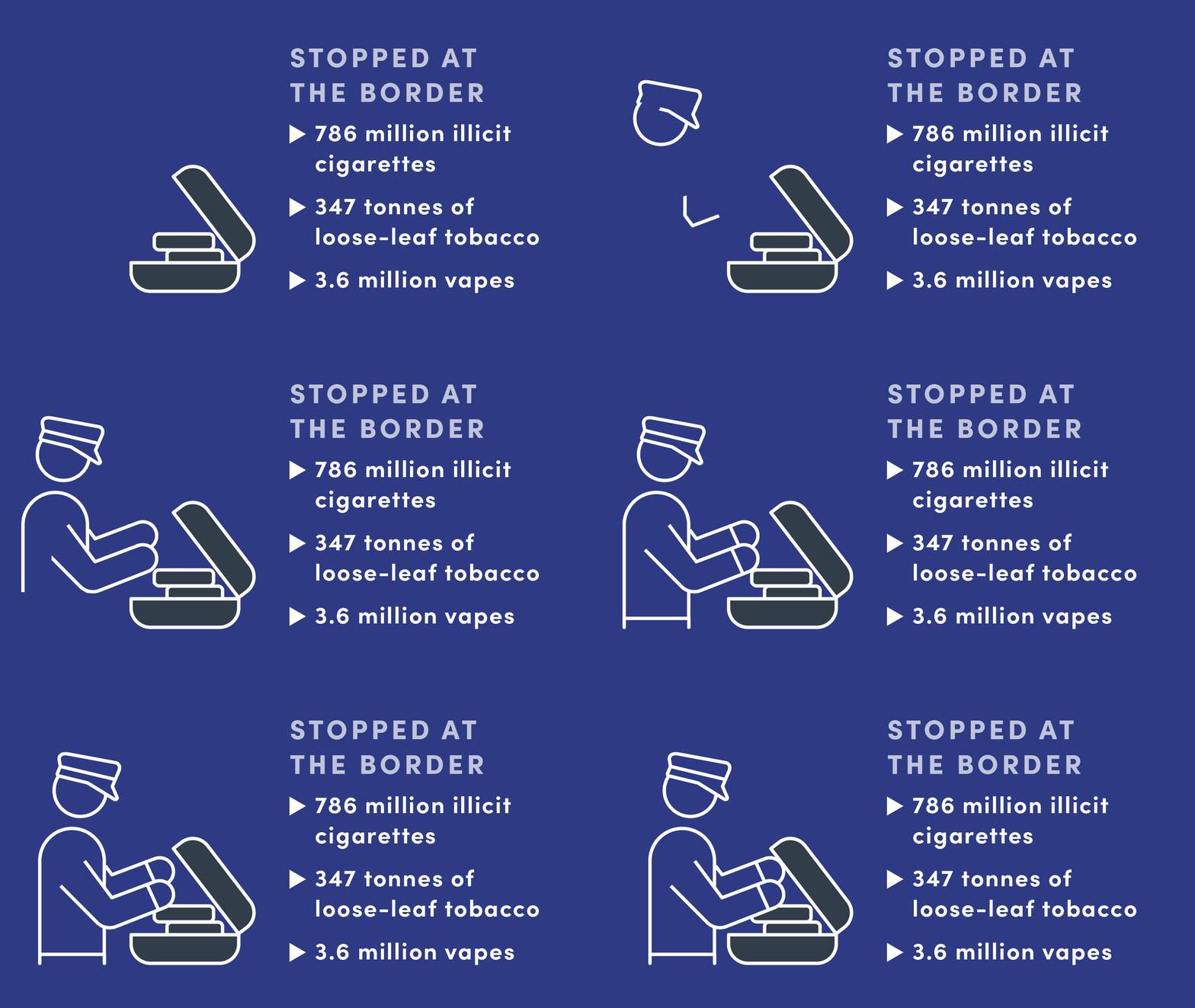
Last year, Singapore Customs issued more than 50 intelligence alerts to customs administrations across multiple jurisdictions. Intelligence shared with ABF alone led to 15 seizures involving 58.9 million cigarettes that year.
“As the world becomes increasingly interconnected and global trade routes continue to evolve, these partnerships become more important,” said ABF Superintendent Raef McDonough. “Close cooperation between agencies is essential for us to prevent criminal networks from exploiting gaps between jurisdictions.”
Learn how ABF and Singapore Customs are working together to protect regional supply chains
from illicit tobacco networks. (Video: Australian High Commission, Singapore)
DISRUPTING THE BUSINESS MODEL
Counterfeit or illicitly imported tobacco products can generate large profits at relatively low cost because they bypass the duties and controls that legitimate traders must comply with.
But tax evasion is only one part of the problem. , including drug and human trafficking, money laundering, and child sexual exploitation and abuse.
Recent enforcement operations in Australia show how these offences can intersect. In March, – an ABF-led National Disruption Group joint agency initiative targeting illicit tobacco networks across several Australian states – led to the seizure of more than 2.4 million illicit cigarettes, 266kg of loose-leaf tobacco and 20,800 vaping devices and accessories in Queensland alone. Officers also seized an estimated A$2.1 million in cash, drug paraphernalia and counterfeit drugs.
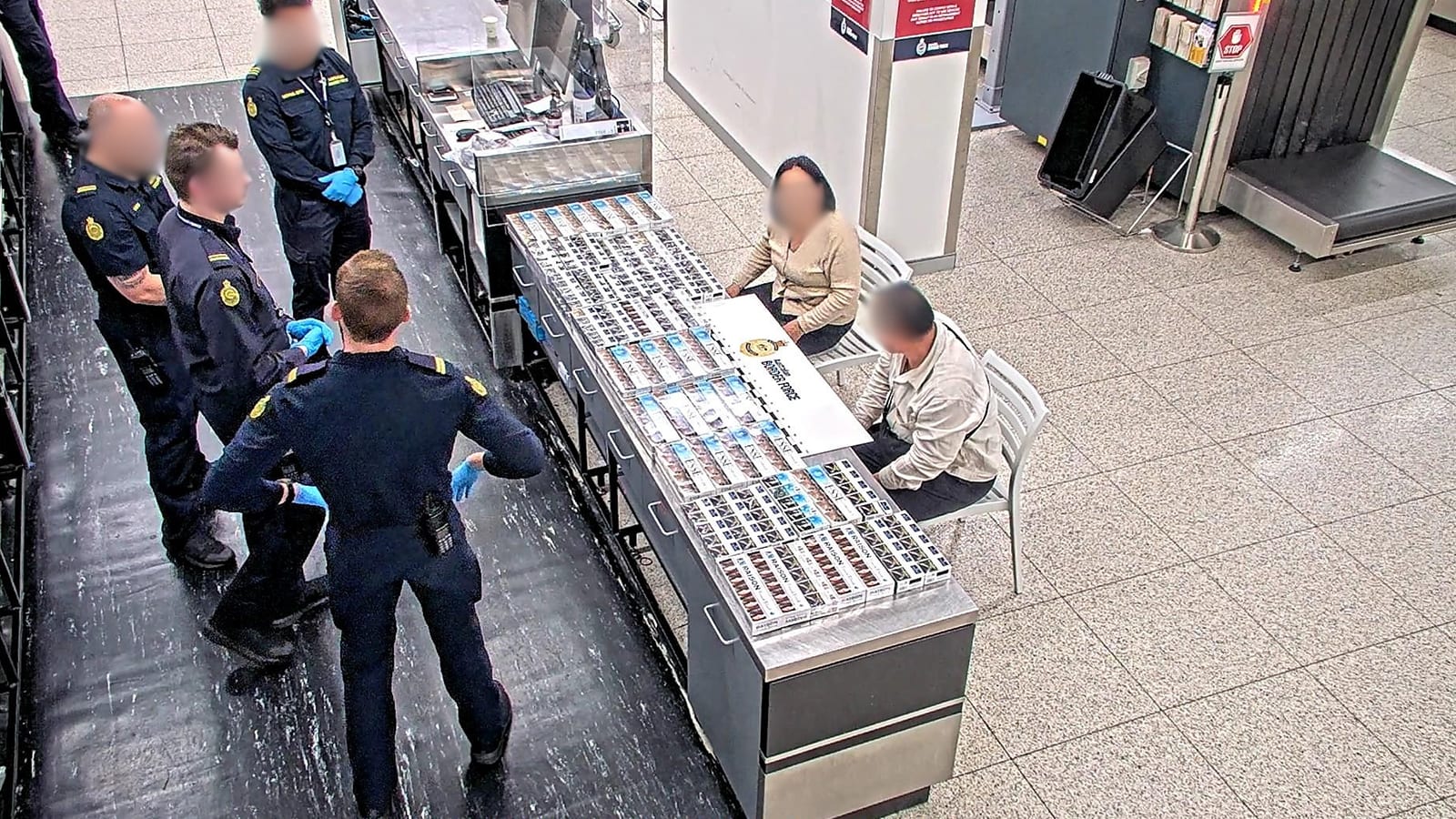
ABF’s enforcement efforts focus on breaking the business model behind the tobacco black market. That means intercepting suspect shipments before they reach Australia and continuing enforcement after they enter the country, through long-running cooperation and intelligence-sharing initiatives with law enforcement and regulatory partners such as Singapore Customs.
“We’ve been working with ABF for many years in areas of trade enforcement as well as trade facilitation, regularly sharing information that has led to successful interdictions,” said Mr Lim Teck Leong, Deputy Director-General of Singapore Customs.
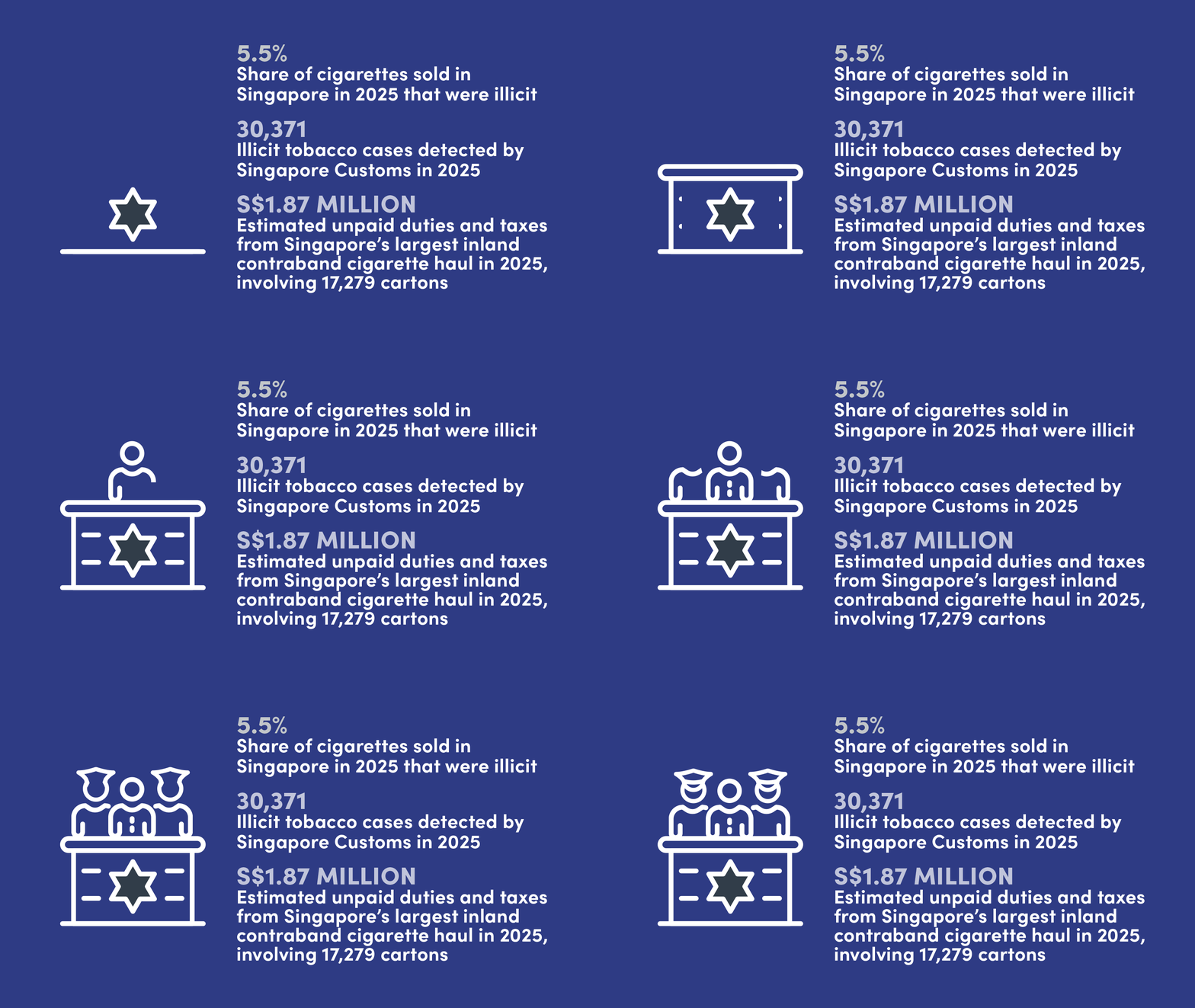
Sources: , CNA,
WHEN INTELLIGENCE MOVES FASTER THAN CARGO
Over the past decade, Singapore Customs has become one of ABF’s most reliable partners globally. “The high level of trust between both agencies has helped establish channels for timely information-sharing, allowing officers to identify high-risk consignments and act before illicit goods enter either country,” said Mr McDonough.
One such case began in 2024, when Singapore Customs investigated a local freight forwarding company for making incorrect declarations. The agency shared its findings with Australian authorities, enabling ABF to identify a shipment declared as gym rubber matting that contained more than 10 million illicit cigarettes.
The company was later fined S$36,000 by the State Courts in Singapore for incorrectly declaring the unique entity numbers of two companies in permit applications and failing to retain key export documents for shipments.
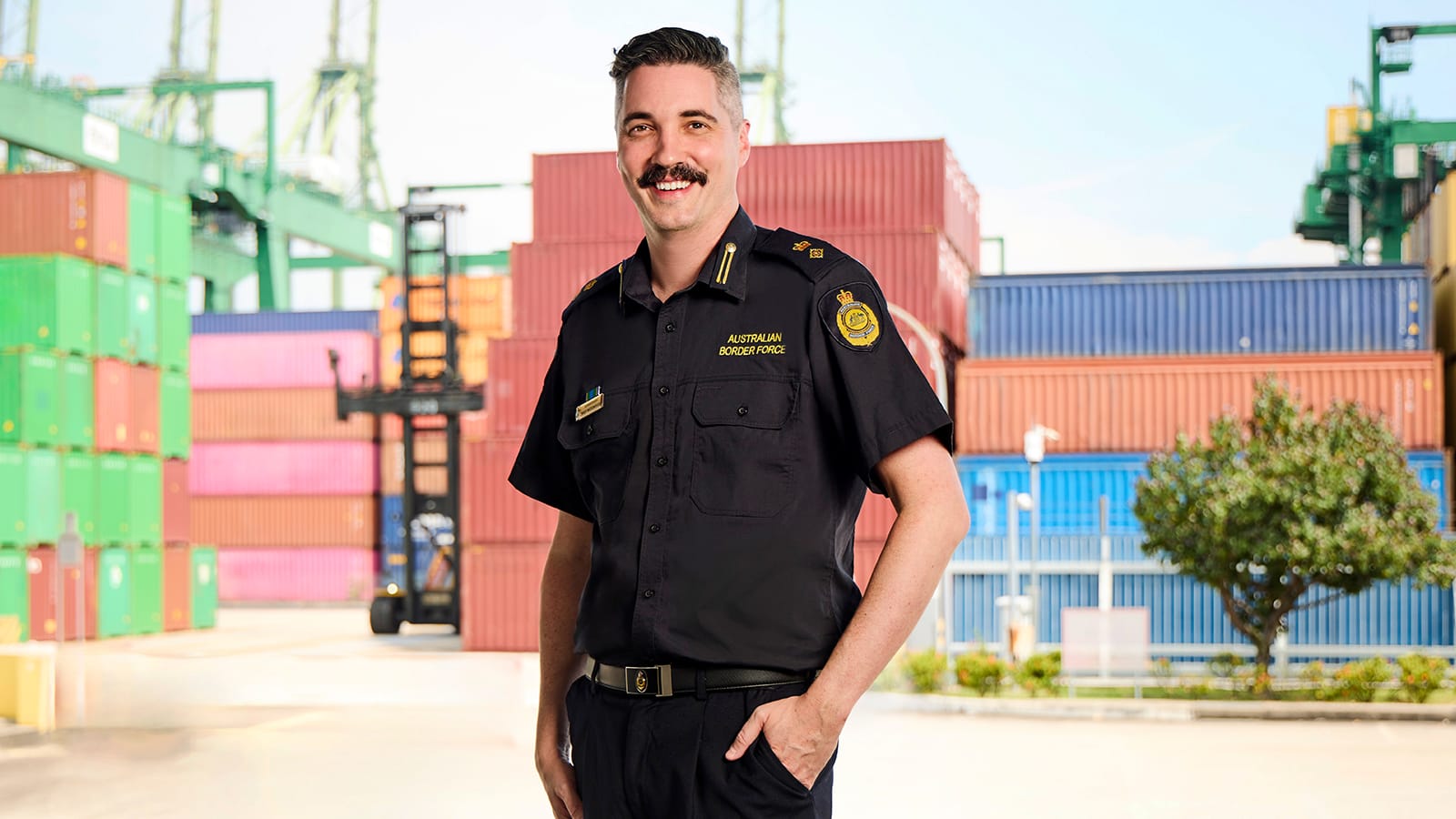
In April 2026, Singapore Customs, ABF and the World Customs Organization (WCO) hosted the WCO Regional Supply Chain Integrity Workshop for customs officers from across ASEAN. Led by officers from ABF and Singapore Customs, the workshop focused on how supply chains can be better secured against criminal infiltration and made more resilient to operational and environmental challenges.
The workshop is part of broader efforts to strengthen international customs cooperation against illicit tobacco and other cross-border threats. With 187 members, WCO supports information-sharing, intelligence exchange and operational best practices to help manage risks across global trade. It also works with industry partners, recognising the role of cooperation between governments and the private sector in strengthening supply chain resilience.
Such cooperation matters because vulnerabilities in supply chains do not stop at national borders. Gaps in one jurisdiction can be exploited by criminal networks to move illicit goods across borders, creating risks for neighbouring countries as well.
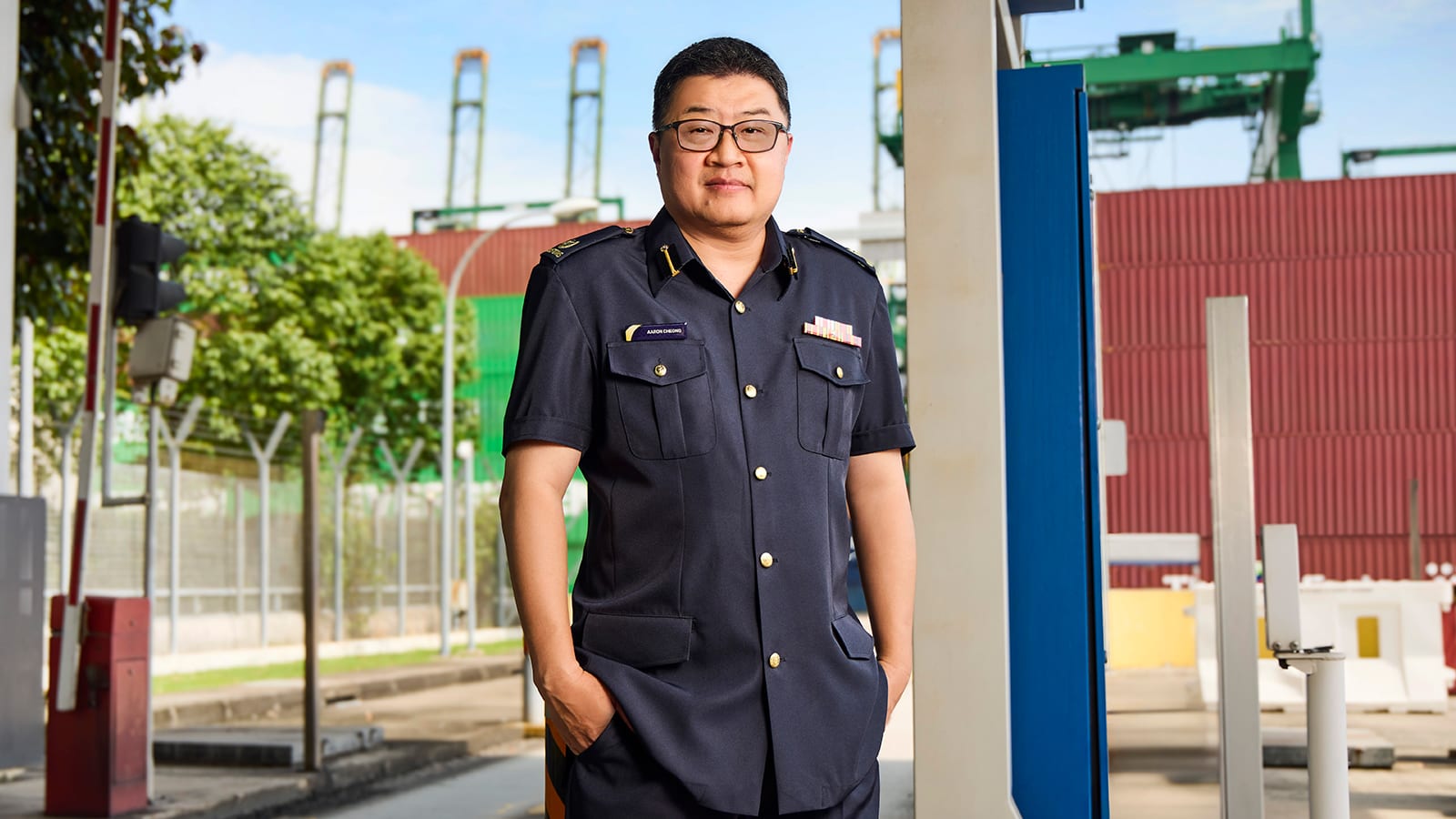
Initiatives like the workshop offer one way to address these shared risks. Another is the Australia-Singapore Border of the Future Partnership, which is strengthening cooperation on customs and broader border management. At the recent , ministers from both countries reaffirmed the importance of practical cooperation in border management and law enforcement to address transnational challenges.
“The illicit tobacco trade is a regional challenge that no country can tackle alone,” said Mr McDonough. “By working closely with Singapore and other partners across Southeast Asia to share intelligence, coordinate enforcement activities and strengthen border capabilities, we are collectively making the region safer and more resilient against organised crime.”